The Books
A library, not a book.
Each volume extends the same framework into a new domain. The introduction and the Christian Edition excerpt are readable here; the rest of the series is listed below.
Volume One · Available
Three editionsThe Might of Opportunity
Establishes the core framework: vacancy, asymmetry, kairos, reflexivity, convexity, and the survivorship correction. The introduction and the Christian Edition excerpt are readable in full on this site.
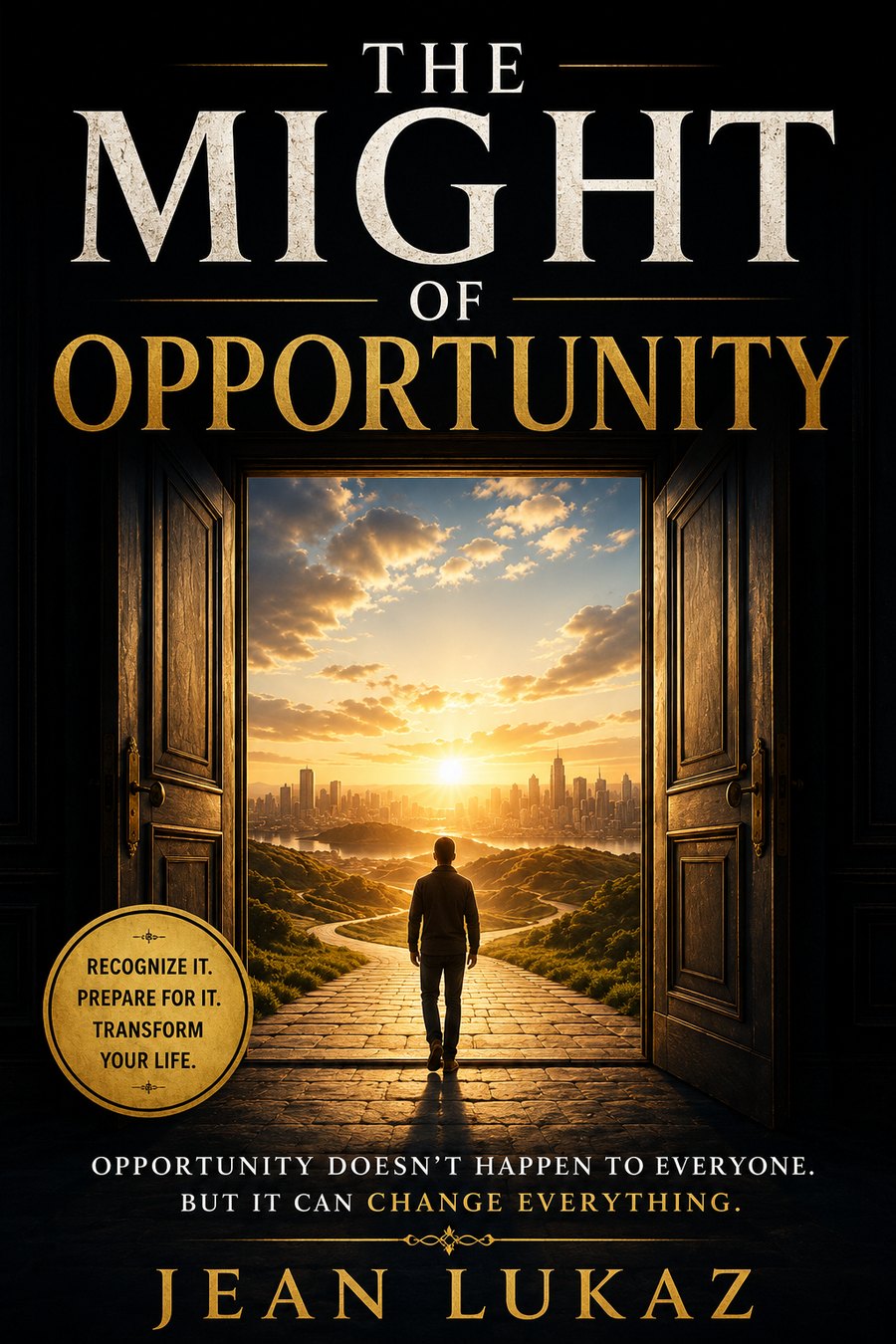
Recognize it. Prepare for it. Transform your life.
Read the introduction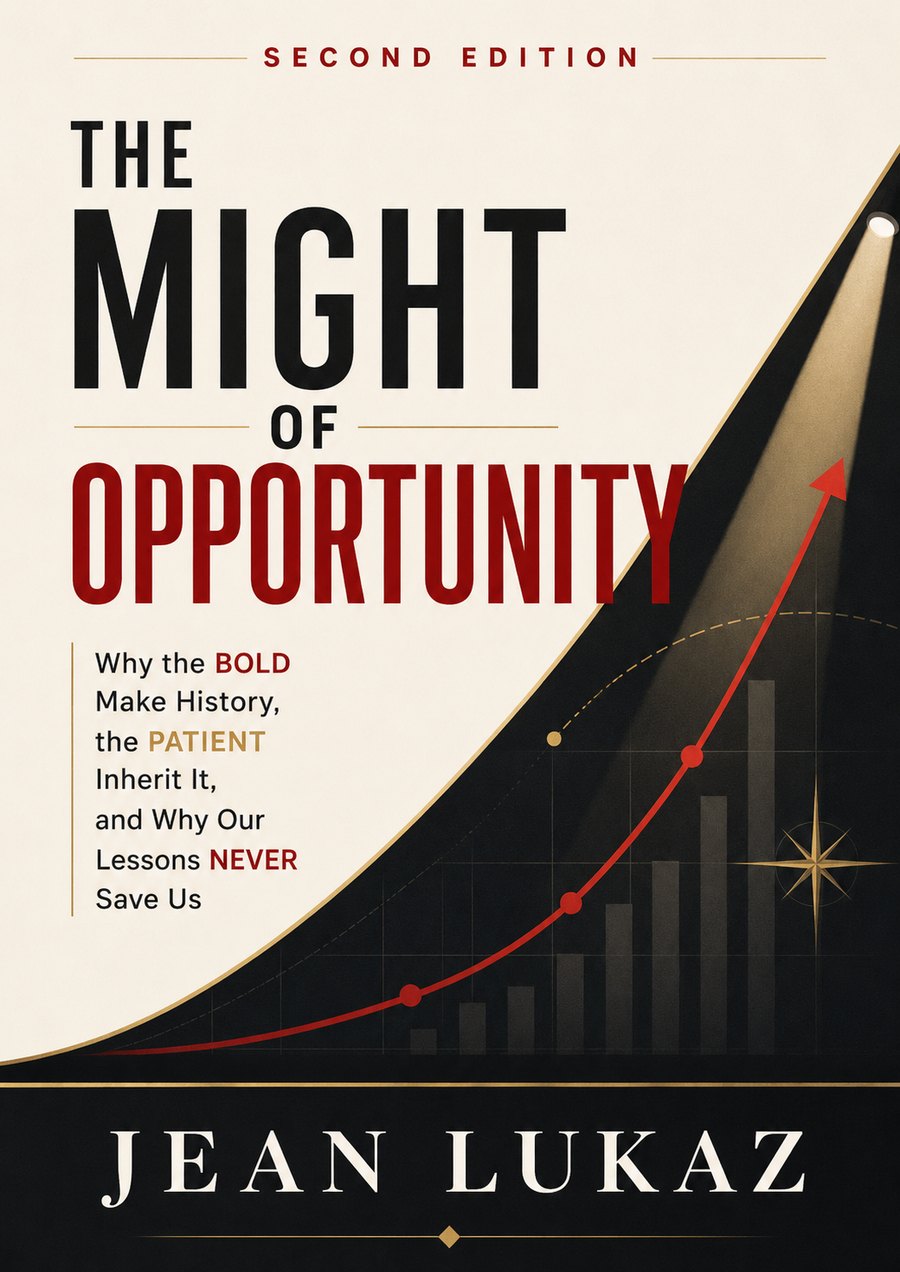
Why the bold make history, the patient inherit it, and why our lessons never save us.
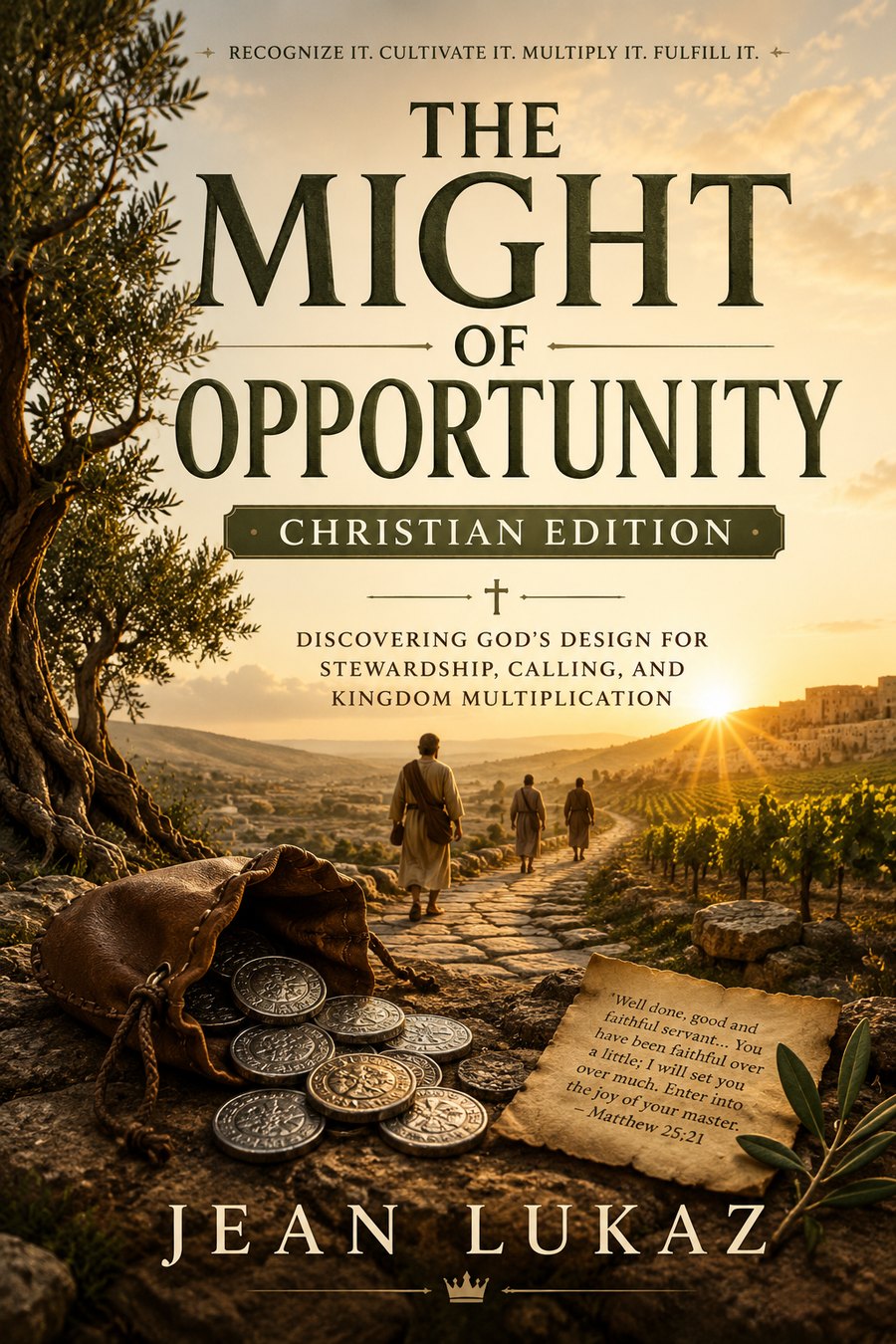
Discovering God's design for stewardship, calling, and kingdom multiplication.
Why do informed leaders repeat disasters they understand perfectly well? This book argues that the pull of a present opportunity can overpower knowledge of the past. Through historical and strategic examples, it contrasts the Initiator, who acts first under uncertainty, with the Watcher, who waits and benefits from what earlier movers leave behind. It examines timing, misleading analogies, overconfidence, and the difficulty of distinguishing sound judgement from a fortunate result. Practical guidance asks readers to state their assumptions, limit exposure, and decide beforehand what evidence would make them change course. The Christian dimension adds a deeper challenge: not every real opportunity should be seized. Scripture brings questions of obedience, responsibility, and moral limits into the pursuit of advantage.
Read the excerptOn the Christian Edition
God has entrusted every believer with opportunities—not merely talents, wealth, or abilities, but divine assignments designed to advance His Kingdom. Drawing from Scripture, history, economics, leadership, and everyday life, The Might of Opportunity – Christian Edition presents Opportunity Engineering as a biblical framework for faithful stewardship. Through the Parable of the Talents and numerous biblical case studies, Jean Lukaz demonstrates that neglected opportunity is not simply lost potential—it is often disobedience. This book challenges believers to recognize, cultivate, multiply, and faithfully deploy every opportunity God places in their hands.
The Library
09 volumes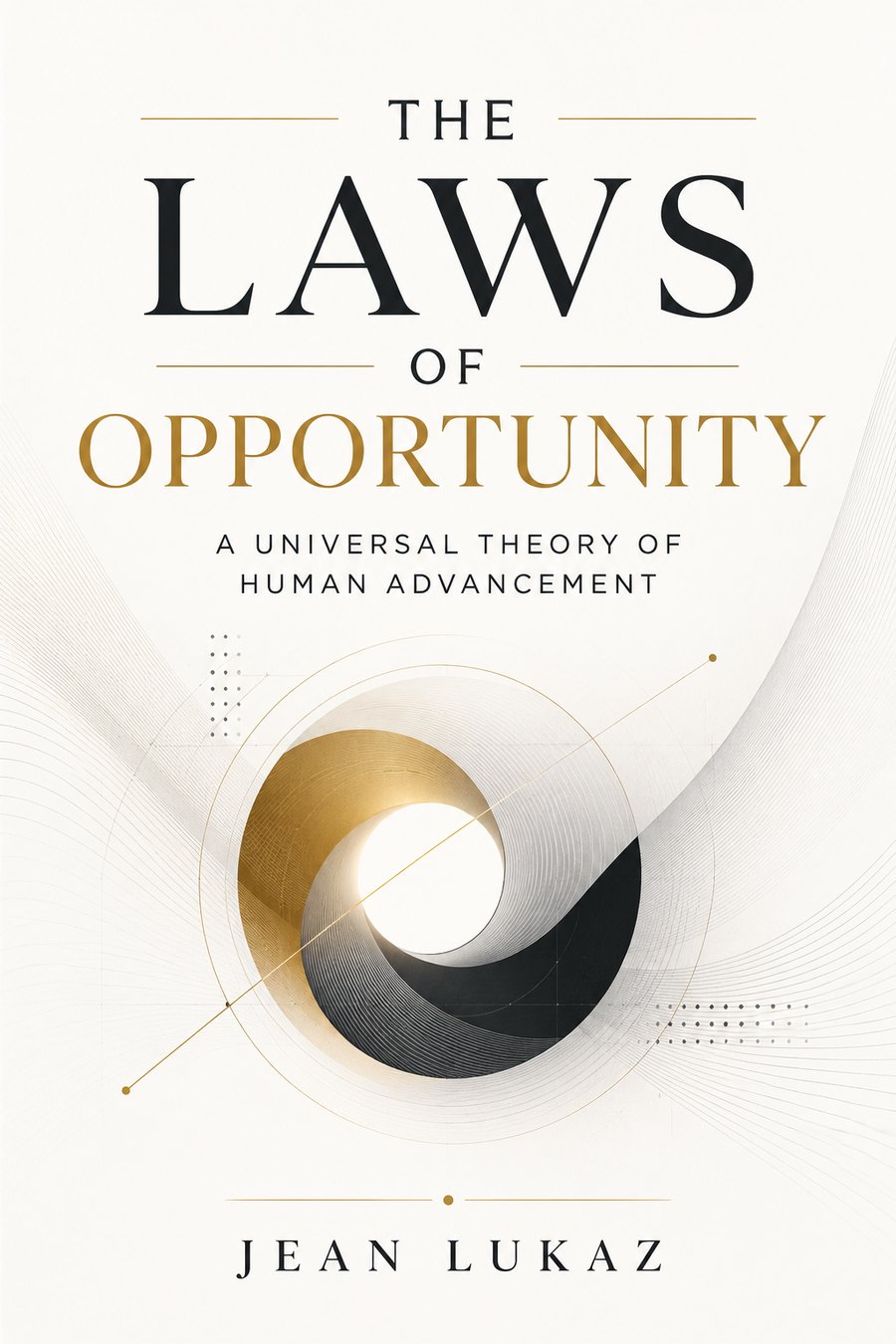 Forthcoming
A Universal Theory of Human Advancement
The Laws of Opportunity
Why do some societies turn talent and resources into lasting progress while others struggle? This book proposes that the difference lies in how opportunity is organised, not simply how much wealth or power people possess. Its Opportunity Engine framework follows seven connected functions: recognising possibilities, evaluating them, creating new ones, widening access, converting potential into value, preserving gains, and renewing systems as circumstances change. Historical readings, including African trading empires, explore how institutions build advantages—and how those advantages unravel. Its proposed laws address timing, changing competitive conditions, opportunities hidden in disruption, overreach, and compounding gains. Applications to government, enterprise, education, and technology invite readers to treat opportunity as something institutions can deliberately cultivate rather than leave to chance.
 In progress
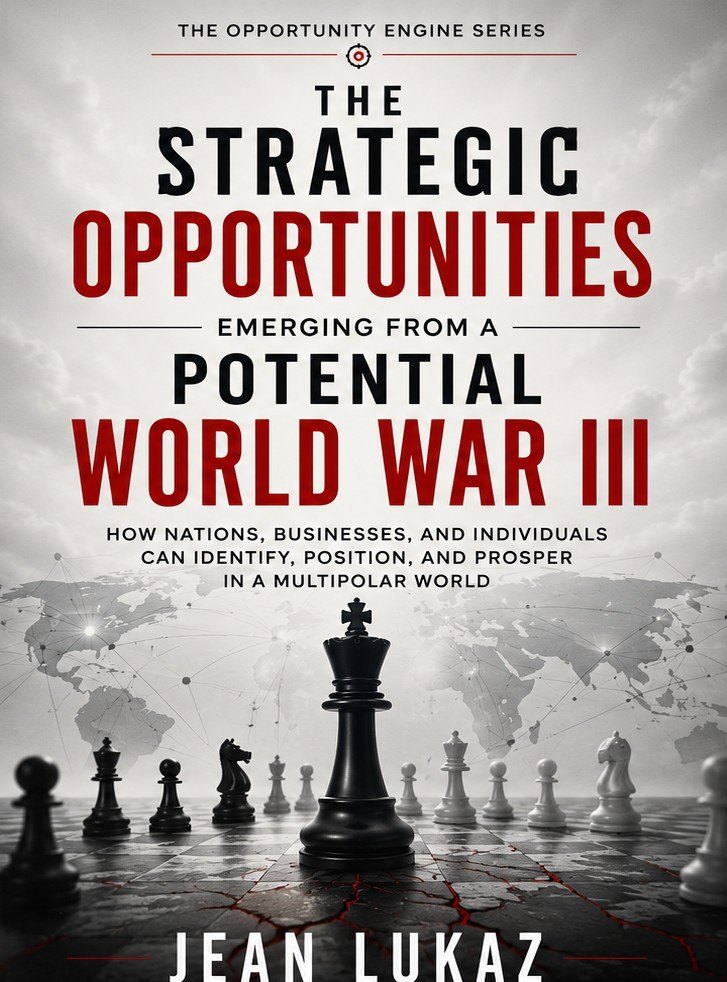
How nations, businesses, and individuals can identify, position, and prosper in a multipolar world
The Strategic Opportunities Emerging from a Potential World War III
Rather than predicting a third world war, this book asks how governments, businesses, and individuals can respond when the international order changes. It examines the institutions built after 1945, the pressures weakening them, and alternative conflict scenarios without treating any single outcome as certain. Regional and sectoral analysis follows shifts in resources, technology, trade, security, and investment, asking who might gain advantage and who could lose it. Africa receives particular attention: demographic and mineral assets could support development, but could also reproduce extractive relationships without stronger institutions. Practical sections turn to preparation and resilience. The closing argument is that strategic change is already underway; understanding it need not depend on war occurring, nor imply that war is desirable.
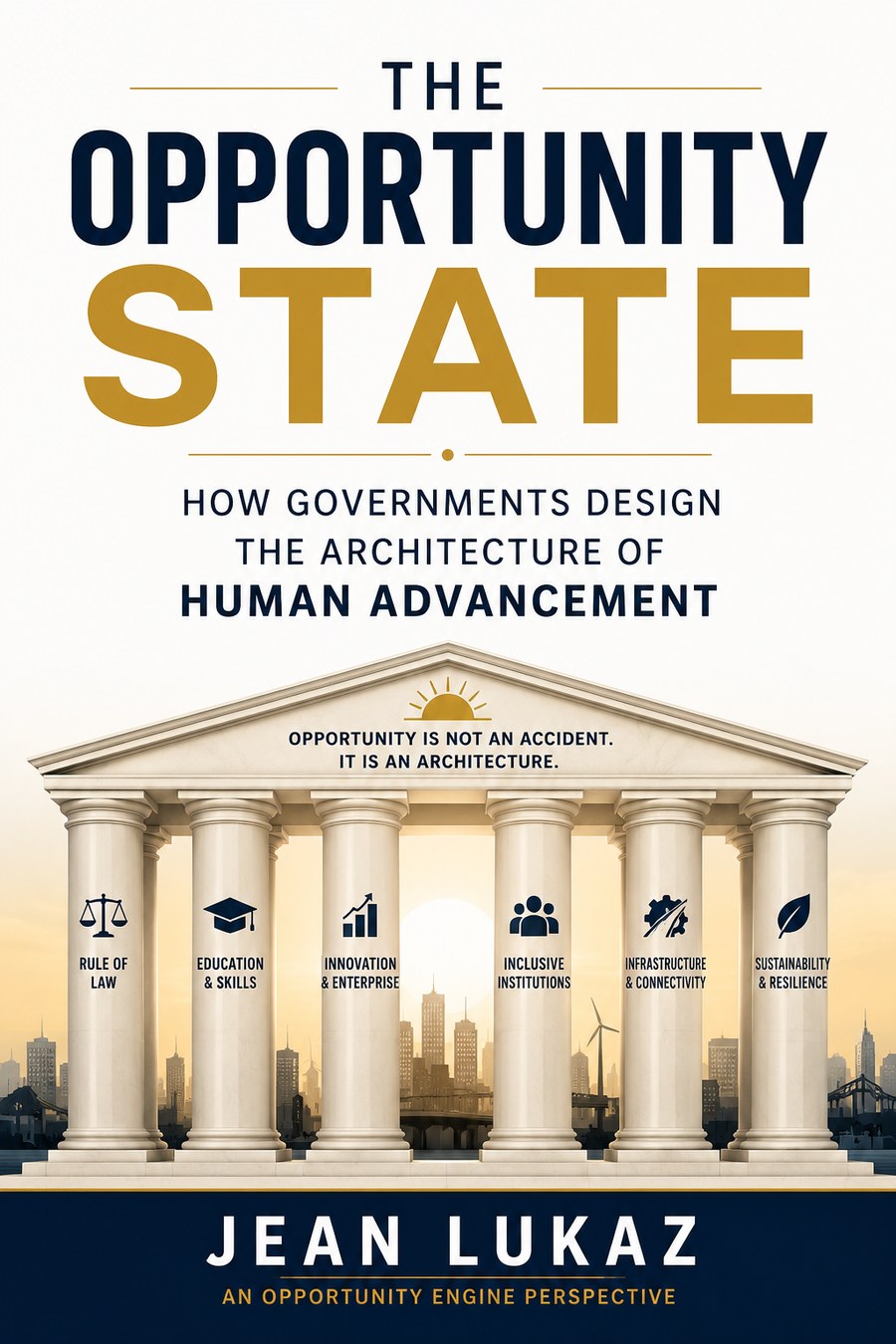
How governments design the architecture of human advancement
The Opportunity State
What would government look like if its central task were to expand people’s real possibilities? This book argues that lasting national progress depends on institutions that help citizens recognise, create, access, and develop opportunities—and protect and renew the resulting gains. It connects that argument to concrete choices about education, property rights, courts, finance, regulation, infrastructure, and state capacity. An opportunity audit helps identify weaknesses, while a reform playbook asks governments to tackle binding constraints rather than attempt everything at once. Paired country studies examine contrasting outcomes across regions. Later chapters consider artificial intelligence, demographic change, climate adaptation, and digital sovereignty. The aim is broadly shared, durable advancement, while acknowledging that no single framework explains every national outcome.
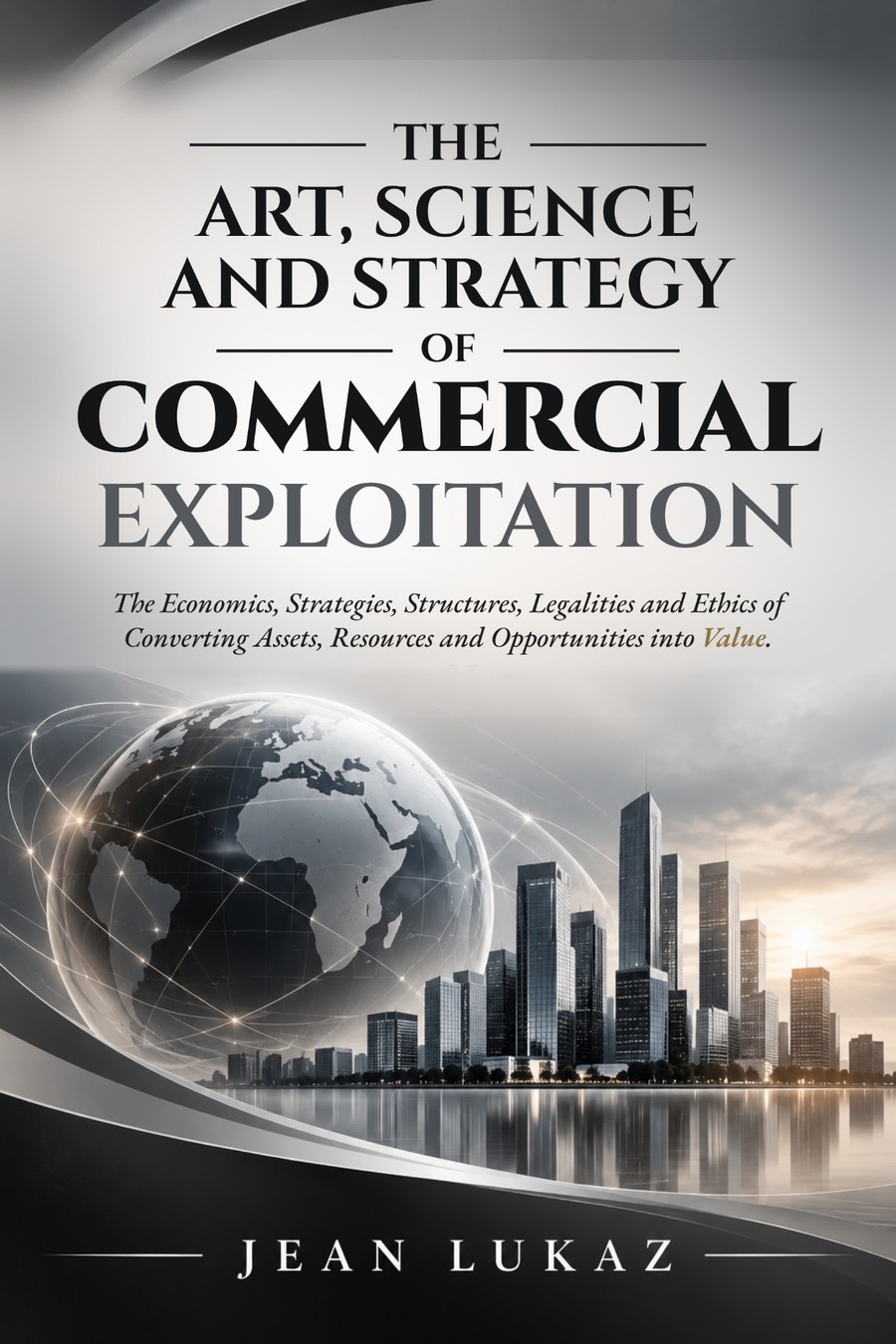
The economics, strategies, structures, legalities and ethics of converting assets, resources and opportunities into value
The Art, Science and Strategy of Commercial Exploitation
Works the exploitation stage of the engine in full: how an identified opportunity is converted into value through structure, legal form, and commercial strategy, and where the ethical limits sit.
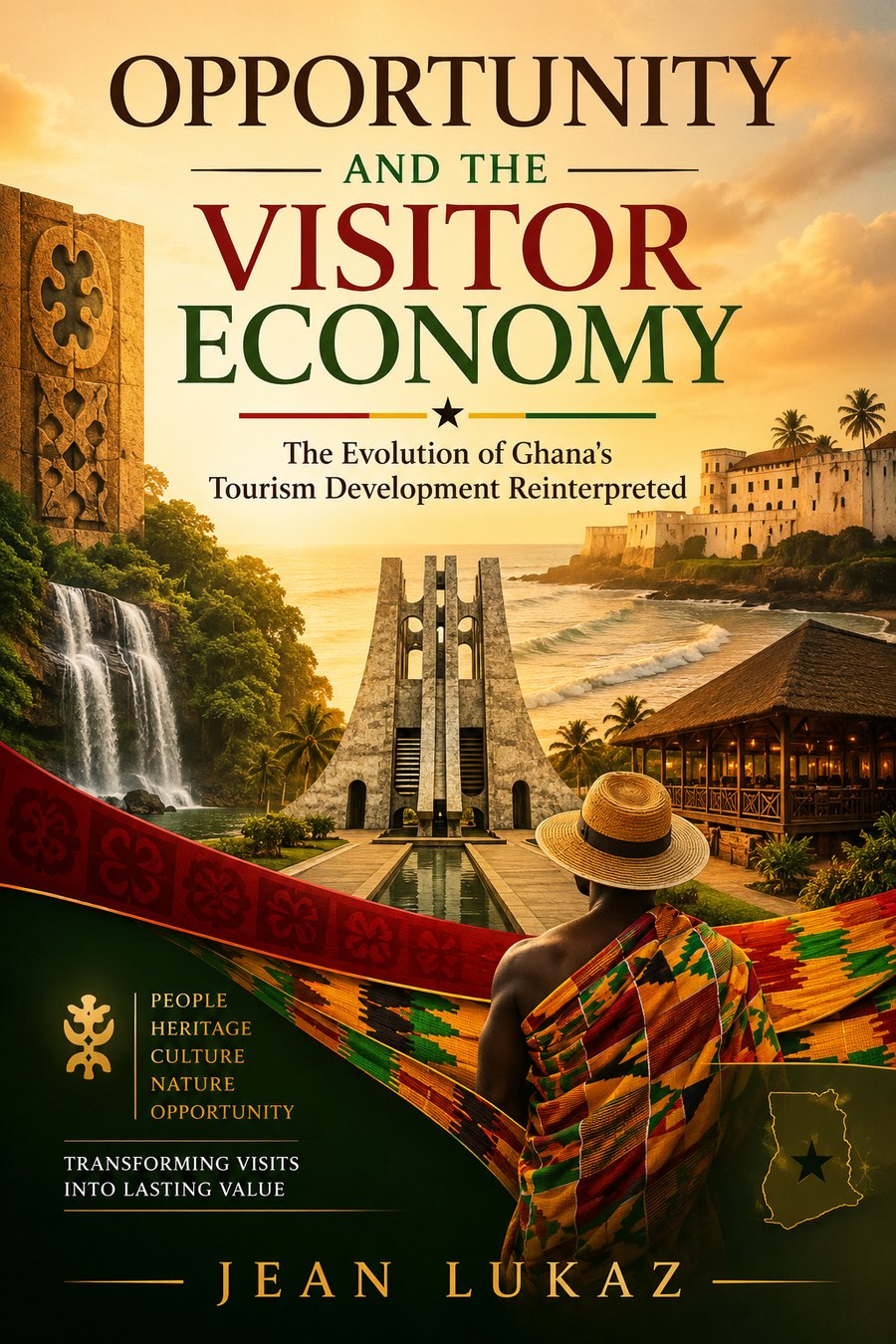
The Evolution of Ghana's Tourism Development Reinterpreted
Opportunity and the Visitor Economy
Ghana’s tourism story is more than a record of visitor arrivals and landmark projects. This book traces how travel, hospitality, heritage, and public policy have created—and sometimes squandered—economic possibilities, from pre-colonial trade networks through independence, political upheaval, and diaspora initiatives such as the Year of Return. Using the Opportunity Engine framework, it asks how attractions become functioning industries, how much visitor spending stays in Ghana, and which communities share the benefits. Chapters examine imported supply chains, asset maintenance, institutional continuity, regional differences, and exclusion. Diagnostic tools and international comparisons lead to a practical blueprint: protect heritage, formalise community benefit-sharing, sequence infrastructure and digital investment, and include informal operators as central participants in Ghana’s cultural economy.
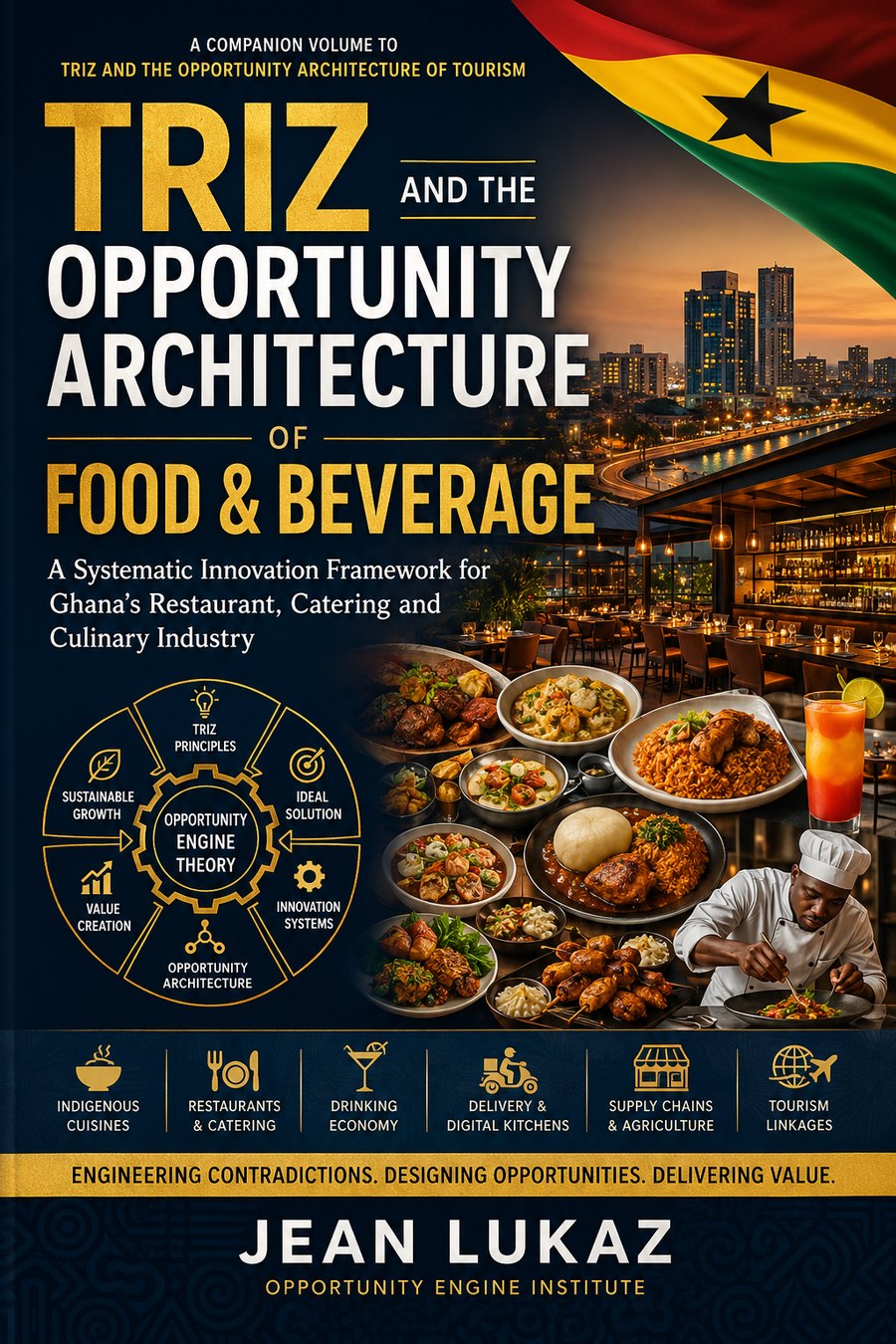
A Systematic Innovation Framework for Ghana's Restaurant, Catering and Culinary Industry
TRIZ and the Opportunity Architecture of Food & Beverage
This book treats Ghana’s food and beverage sector as a connected economic system, encompassing street-food vendors, restaurants, caterers, drinking establishments, delivery platforms, regulators, and professional associations. It combines Opportunity Engine Theory with TRIZ, a structured problem-solving method that seeks to redesign apparent trade-offs rather than simply accept them. Its central tension is practical: formalisation can raise costs and compliance demands faster than a small business gains the capacity to survive them. Detailed regulatory mapping supports proposals for sequenced formalisation, stronger trust signals, shared coordination, and better preservation of skills and business knowledge. Later chapters examine technology, circular systems, and national strategy. The conclusion presents these as bounded design proposals—not proven solutions—and identifies where evidence remains incomplete.
The Opportunity Engine of Civilization
Marriage Beyond Love
Marriage is more than a private love story. This book examines how households and dynasties have used marriage to build alliances, share resources, protect inheritance, and carry advantages across generations. Drawing on historical marriages, merchant families, and legal traditions, it explores both what unions create and how they become vehicles for exploitation, overreach, or decline. Its central framework follows the work of recognising, evaluating, creating, accessing, using, preserving, and renewing opportunity. Later chapters bring that historical perspective into modern relationships through questions about shared capabilities, networks, protection, and changing circumstances. Rather than rating a partner or reducing marriage to a transaction, the book offers a structured way to examine one important dimension of building a life together.
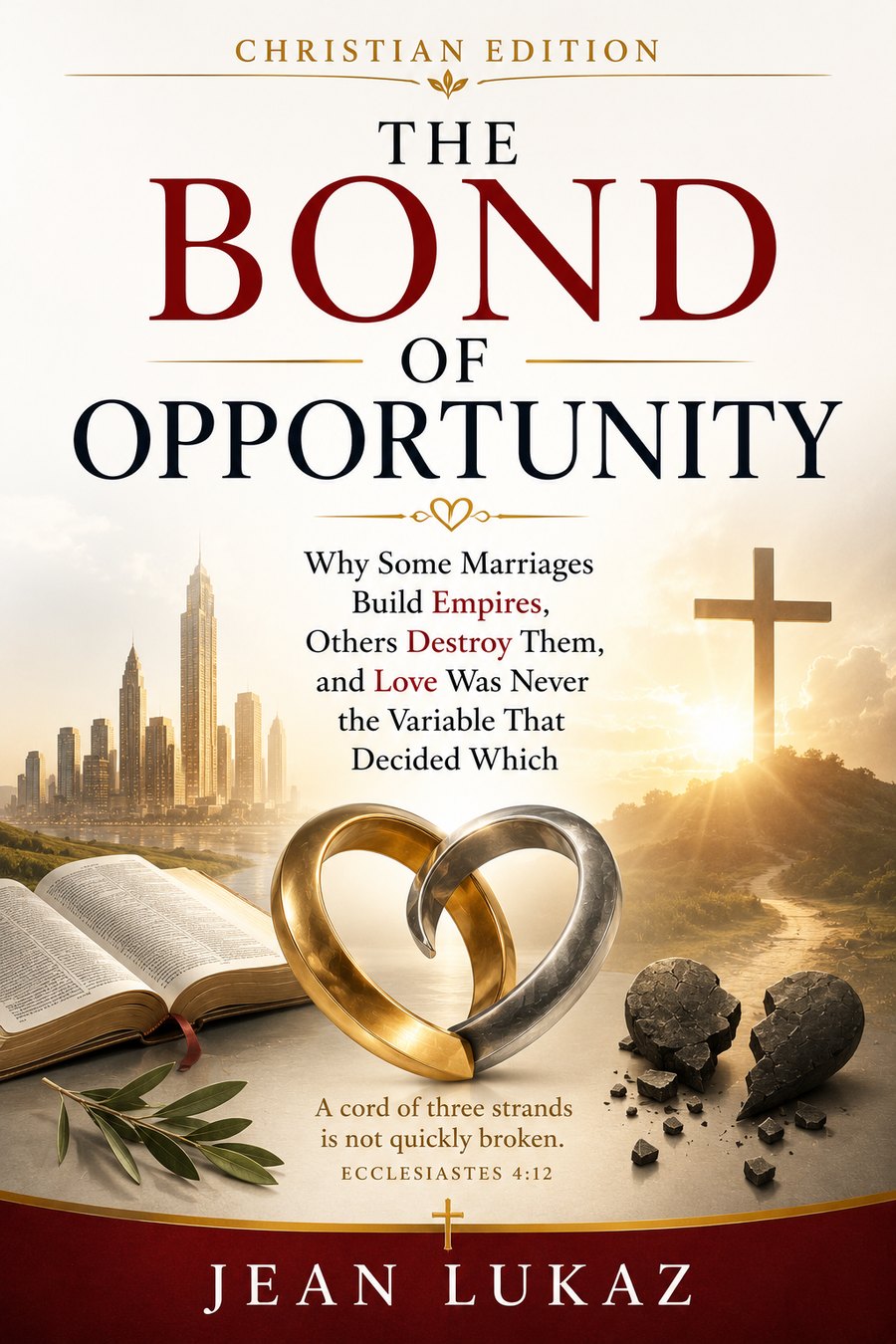 Christian Edition
Why some marriages build empires, others destroy them, and love was never the variable that decided which
The Bond of Opportunity
Why do some marriages strengthen a family’s future while others leave it exposed? This book approaches that question through historical stories of alliances, inheritance, commercial families, and unions that became destructive. It follows the resources a marriage can create—not only money, but skills, reputation, relationships, and access—and asks how those gains survive changing circumstances. Practical chapters invite readers to revisit the assumptions behind their own shared plans without turning a relationship into a scorecard. The Christian Edition places these arguments alongside biblical accounts in ‘Witness of Scripture’ reflections, including passages that challenge the framework’s limits. Its concern is deliberate stewardship across generations, while recognising that love, companionship, providence, and a marriage’s deepest worth cannot be captured by an opportunity audit.
A New Covenant Theology of Divine Assistance, Human Potential and the Fulfilment of Christian Purpose
The Paraclete and the Opportunity Engine
How does the Holy Spirit’s promised presence shape ordinary decisions? This book brings biblical teaching about the Paraclete—the one called alongside—into conversation with a practical framework for recognising and responding to opportunity. It moves from the New Covenant and the Spirit’s personhood to revelation, instruction, discernment, guidance, and empowerment, then considers education, work, personal growth, and the Church’s public life. Written with particular attention to Ghanaian Christianity, it challenges both passive waiting and religious claims that confuse prosperity or an open door with God’s approval. Biblical studies, contrasting examples, and teaching modules encourage thoughtful application. The goal is not a technique for securing success, but faithful judgement, Christlike character, and participation in God’s purposes, including when obedience involves restraint or suffering.
Opportunity Engineering
Why Every Society Designs Opportunity — Whether It Knows It or Not
Opportunities do not simply appear; institutions help determine who can recognise, reach, and benefit from them. This book presents opportunity engineering as a practical discipline for governments, businesses, universities, and families. It asks how systems can be designed to meet unmet needs, widen access, preserve useful capabilities, and renew themselves before their methods stop working. Alongside that constructive programme, it examines how extraction can survive by changing form, from older economic arrangements to contemporary platforms. Decisions under uncertainty receive equal attention: readers are encouraged to test assumptions, commit in stages, and judge their reasoning separately from the outcome. The result is a framework for deliberate institutional design, with attention to who gains, who remains excluded, and what needs rebuilding.
In the pipeline
- In progress
Country volume
Opportunity in Ghana
A grounded application of the framework to Ghana's economy, institutions, and decade-ahead trajectory.
- Planned
Domestic volume
Opportunity in Marriage
Extends the framework into the most consequential long-horizon decision most people will make.